
Campaign strategy, comics, brand storytelling & social media execution for Bakken Bears
One brand. Four audiences. One story that never repeats itself.
Basketball is niche in Denmark, well behind handball and soccer. Families didn't see it as entertainment, they saw it as a sport. Bakken Bears needed a narrative shift, not just marketing, to reach families, parents, and health and civic audiences without sounding like the same message four times.
I built one campaign concept, Everyday Super Heroes, and told it through comics, animated video, Snapchat filters, Facebook and Instagram ads, posters and event collateral, adapting the angle to each audience while staying visually one brand.
This started as a solo semester project during my Bachelor's. I pitched the concept to Bakken Bears, who liked Campaign 3 best. We then worked on it together, refining details, before the club released it on their social media channels, where it ran for 9 weeks.
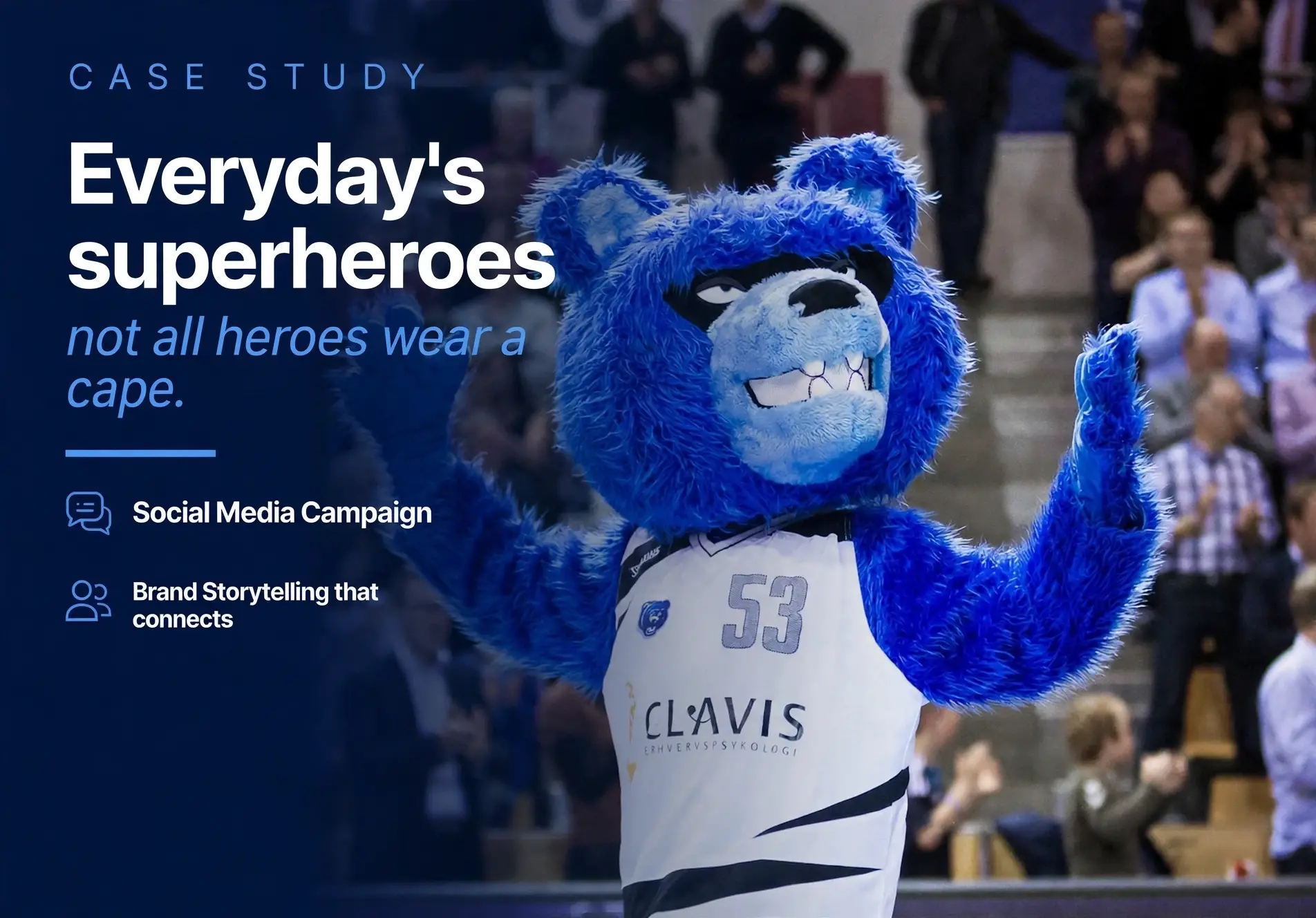
A perception problem: basketball wasn't seen as family entertainment in Denmark.
IdeaEveryday Super Heroes: the brand as helper, families as the heroes.
PhysicalFlyers, posters and offers handed out at games.
DigitalComics, animation, Facebook and Instagram ads, Snapchat filters.
AdaptationMovember, elections, breast cancer awareness, same visual universe.
OutcomeThe club chose Campaign 3 and ran it on social for 9 weeks.
Basketball is niche in Denmark, less popular than handball or soccer. Families didn't see it as entertainment, they saw it as a sport. Repositioning the club meant a narrative shift, not just a marketing push.
Marketing amplifies an existing perception. Here the perception itself, "basketball is a sport, not entertainment," was the problem. Amplifying it would have reinforced the wrong idea. The fix had to change what the brand meant, not just how loudly it said it.
Digital, physical, social, print, in-game and out-of-game. Comics, animated videos, Snapchat filters, posters, email, event collateral. Every touchpoint needed to reinforce the same narrative without repeating it: consistency without rigidity.
Usually the visual identity fragments first, since each format has its own habits: a poster behaves differently from a Snapchat filter. The fix was to lock the characters and the visual anchors, and let format-specific execution vary around them.
One concept had to work for families (fun, visual), adults (civic), and social causes (health). Same visual universe, different story angles. The challenge was making that feel intentional, not like the brand was being stretched too thin.
The organizing idea: celebrate ordinary people doing extraordinary things. This reframes basketball from a sport into a platform for human stories. The brand becomes a stage for the audience, not a spectacle they watch.
"Hero" gives the idea instant visual language: capes, poses, comic-style framing. "Everyday" is what makes it inclusive, since it puts the fan in the frame instead of only the players. Together they turn a sports brand into a storytelling platform.
Most brands place themselves as the protagonist. This campaign flips that: Bakken Bears is the helper, families are the heroes. The shift changes how the message lands, since it enables the audience's story instead of telling the brand's own.
It changes the call to action. A brand-as-hero campaign asks people to admire the brand. A brand-as-helper campaign asks people to see themselves in it, which is what made the same idea travel across families, parents and health campaigns without feeling like advertising each time.
One character family became the visual through-line across comics, animations, stickers, filters and posters, recognizable and flexible enough to work everywhere without feeling forced. Consistency through character, not templates.
Templates constrain layout; characters carry identity regardless of layout. A comic panel and a Snapchat filter look nothing alike as templates, but the same character makes both instantly recognizable as one brand.
Handed out at games and pre-game events, giving fans a tangible, take-home piece of the campaign rather than something purely digital.
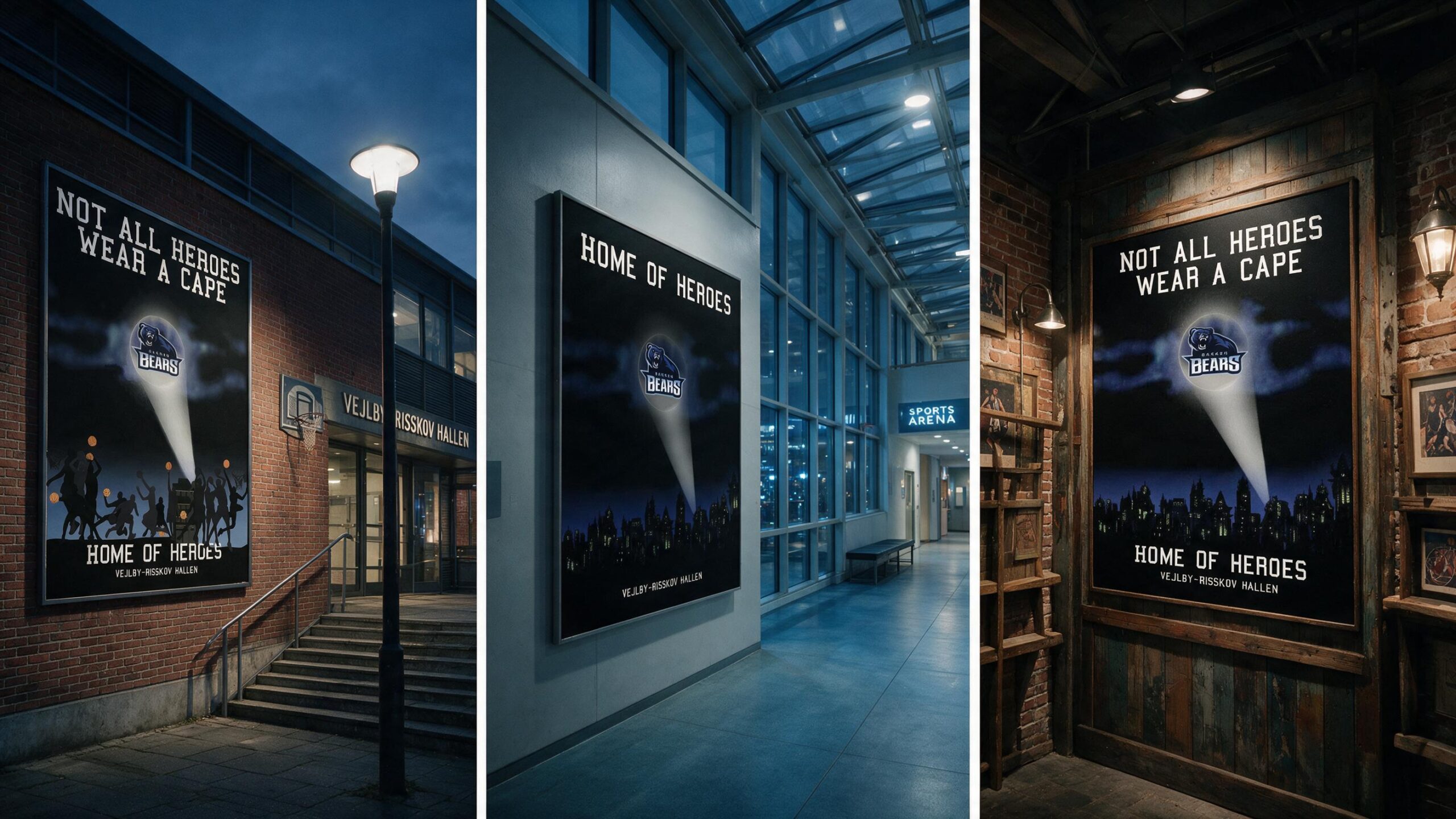
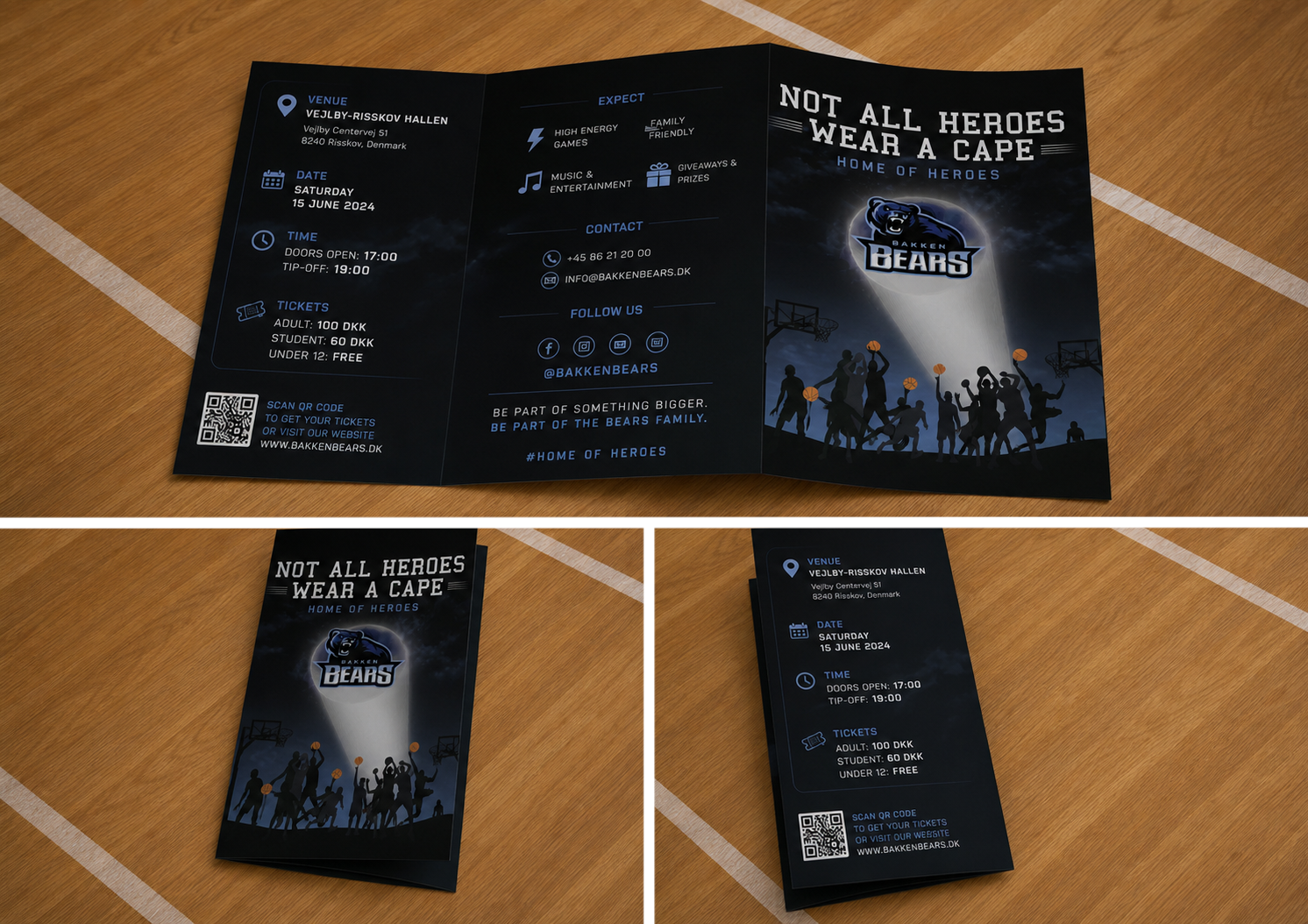
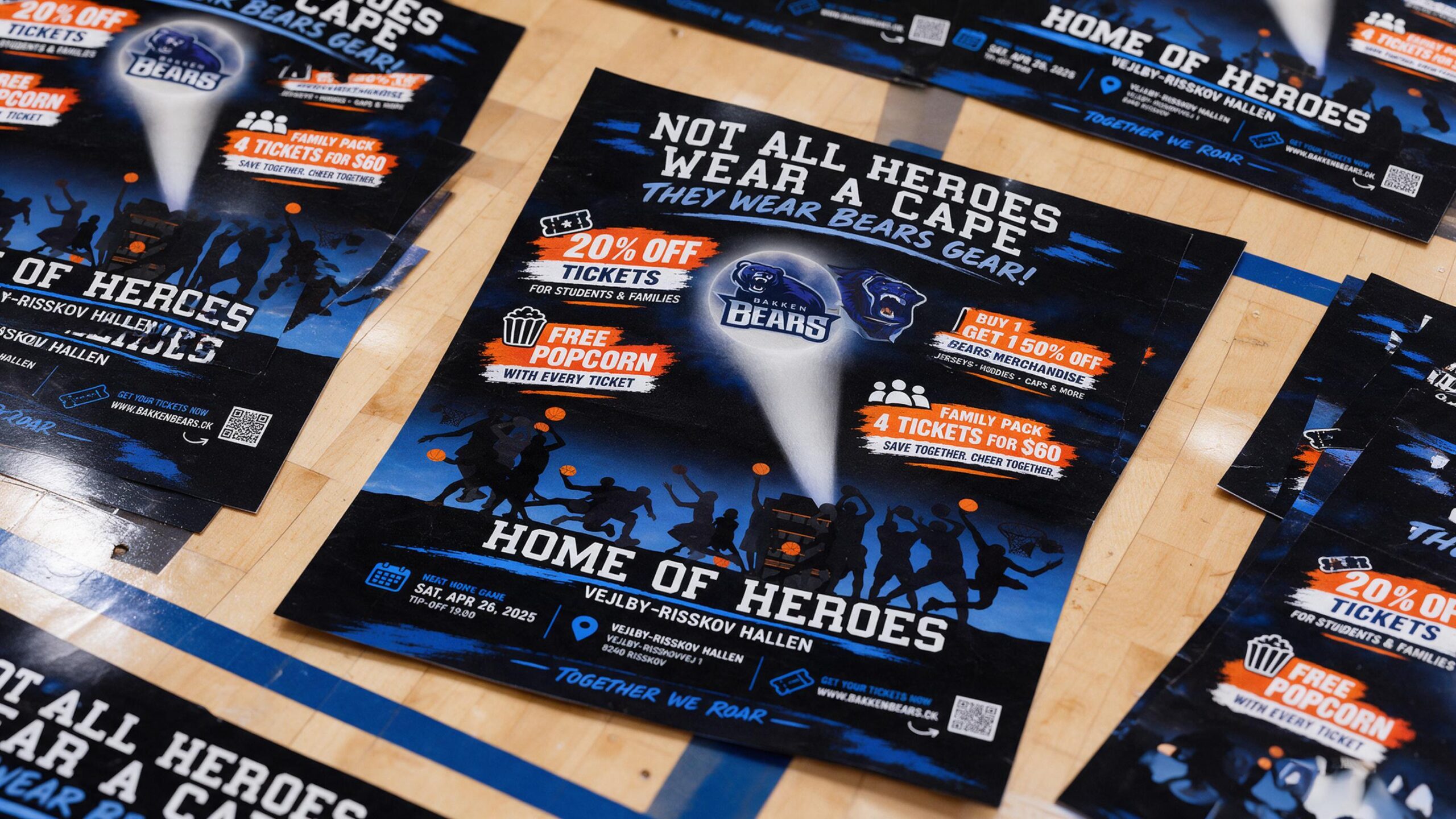
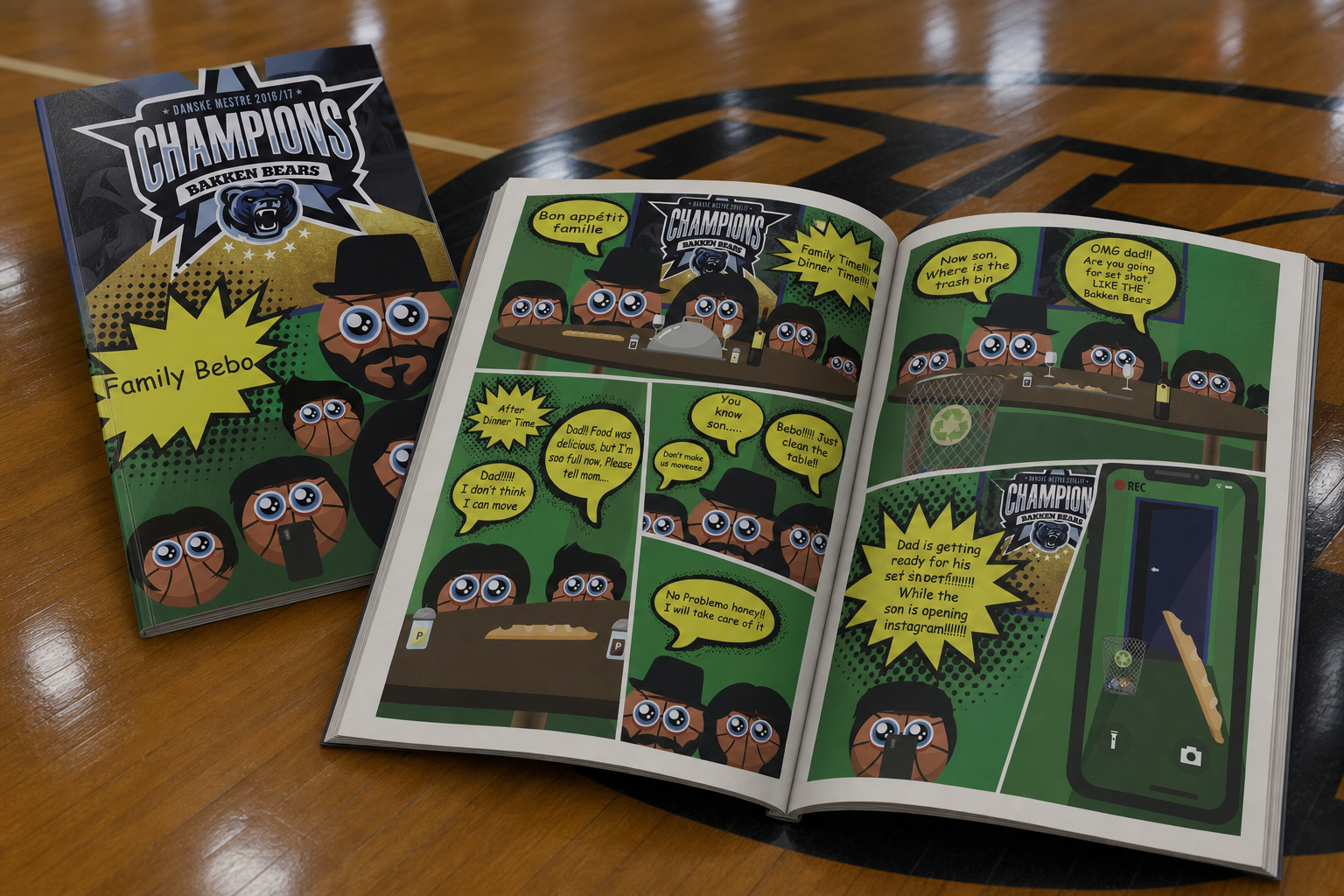
Narrative flexibility: the same universe, told through comics and short animations, and through different story angles depending on occasion and audience.
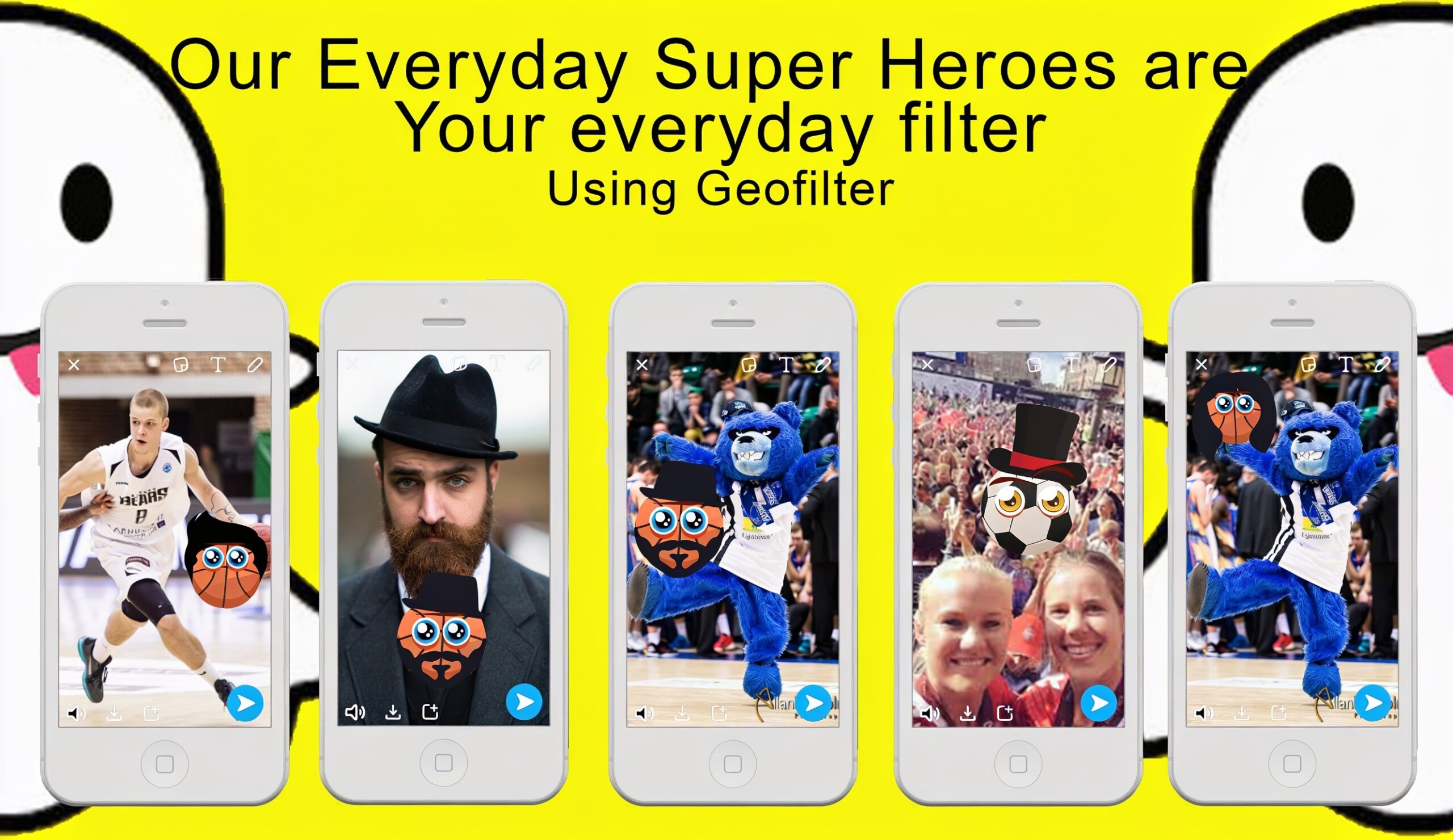
It matched where the youngest end of the family audience already was, and a geofilter turns "everyday super hero" into something a fan puts on themselves at the game. That's the brand-as-helper idea, made literal.
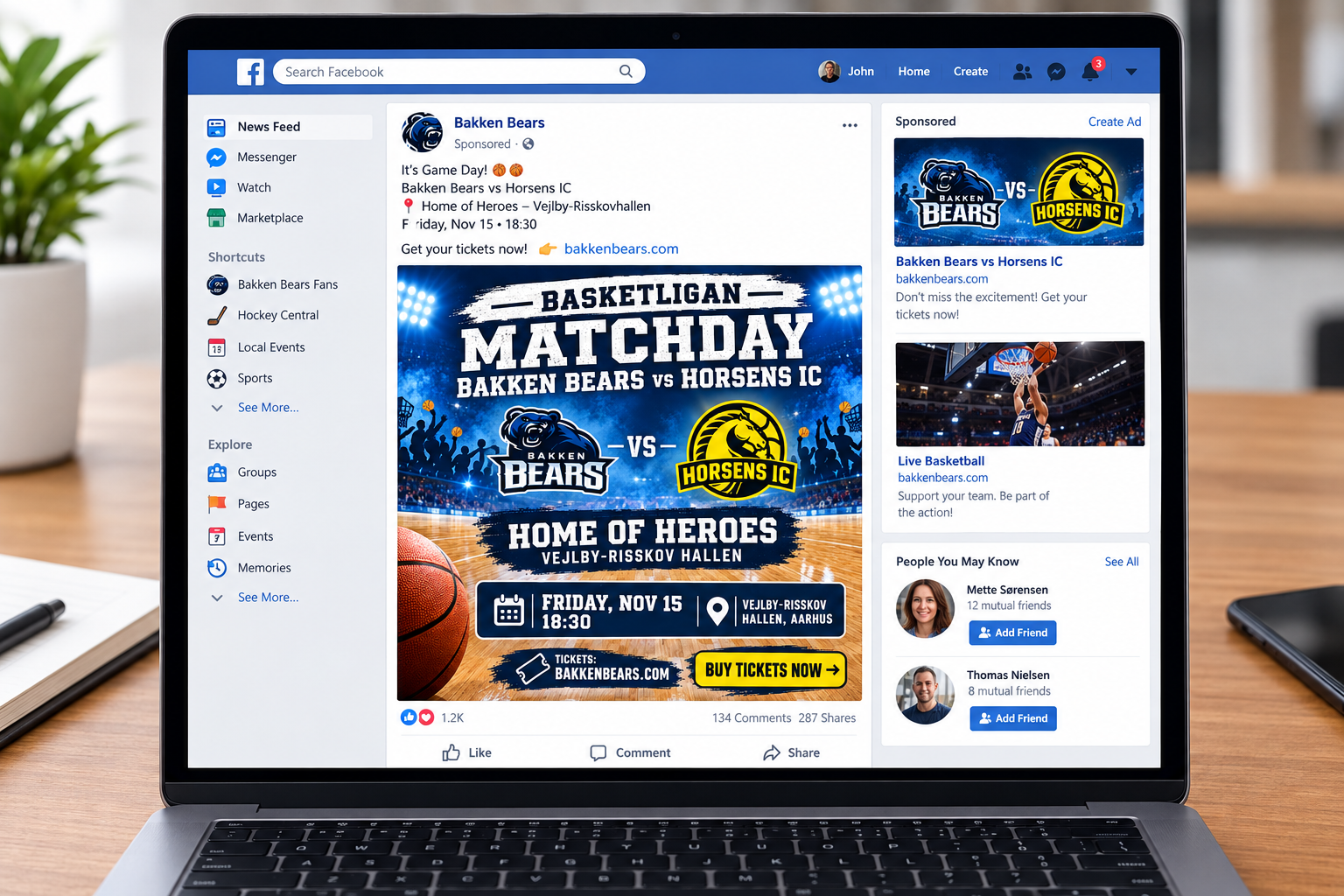
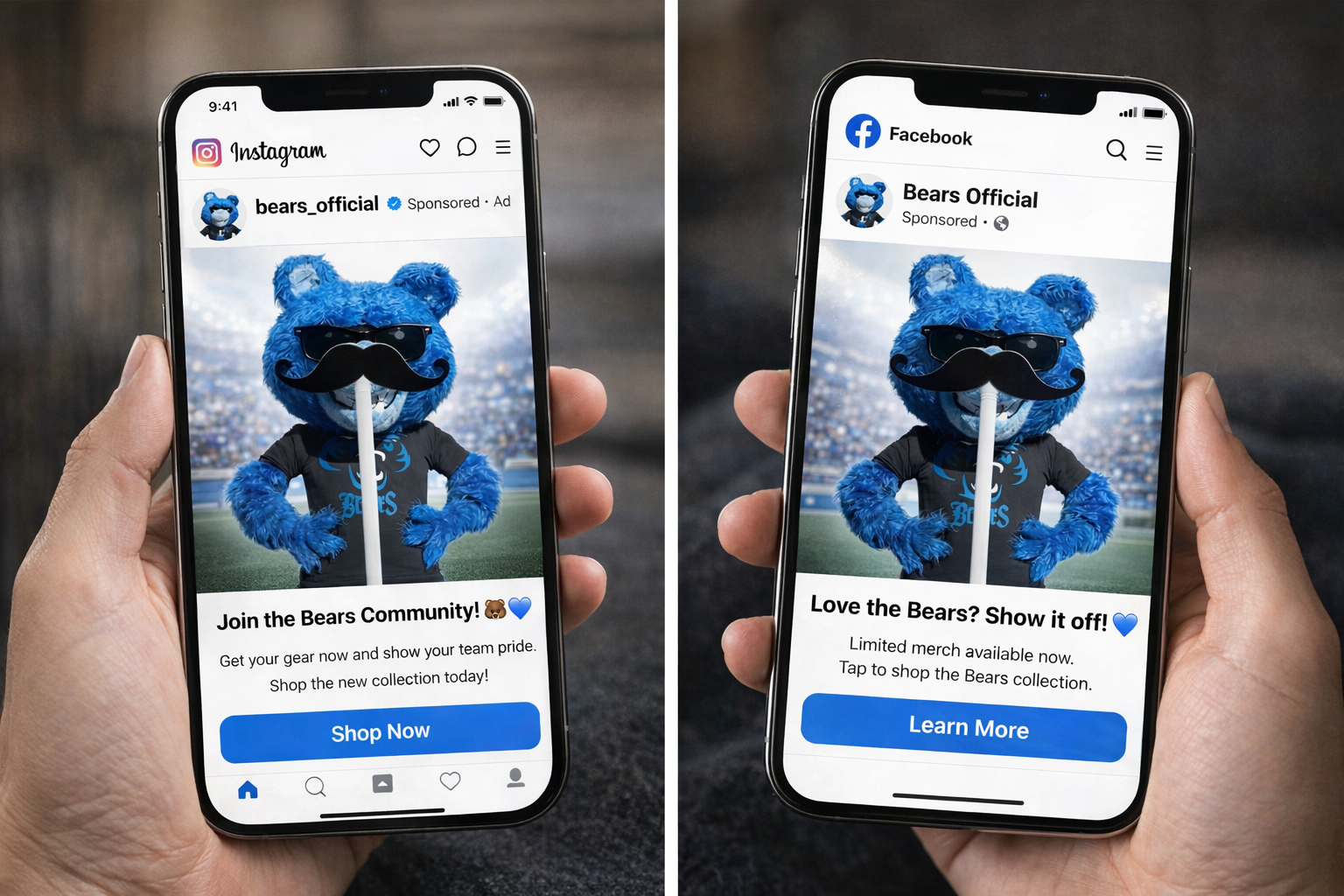
Same core idea, different audiences, different angles. This is the campaign the club picked up:
By keeping the same characters and tone as the fun campaign, rather than switching to a serious register for the serious topics. The audience already trusts the visual universe, so the cause rides on that trust instead of asking for new credibility each time.
When I presented the work, Bakken Bears liked Campaign 3 most. They took it on and ran it across their social media channels for 9 weeks.
Seeing Campaign 3 live on the club's own channels taught me what social media rewards. The cause-led posts (Movember, elections, breast cancer awareness) were the ones the club chose to run, and the same characters kept every post recognizable in a busy feed. Matching the angle to the platform, a younger audience on Instagram and adults on Facebook, let one concept speak to different people without diluting the brand.
Set a measurement plan per platform and audience segment before launch, for example tracking Movember on Instagram and the election posts on Facebook separately, so each angle's performance is visible on its own rather than only in the combined totals.
Ready to turn your brand into one cohesive story?